
Pearl River Deed Types
Several conveyance types appear in Pearl River County deed records. A label hints at the parties' purpose, but the full text and any later filings show how the instrument truly fits the chain.
| Deed Type | What It Does | Common Use |
|---|---|---|
| Warranty deed | Conveys land with stated promises | Ordinary sale |
| Quitclaim deed | Conveys whatever interest exists | Family transfer or cleanup |
| Trustee or executor deed | Records a fiduciary transfer | Trust or estate land |
| Tax or foreclosure deed | Records a transfer after legal process | Distressed-property chain |
The clerk also indexes deeds of trust, cancellations, plats, liens, lis pendens, easements, and releases. A single related filing can change what a deed means.
Pearl River Chancery Custody
The Pearl River County Chancery Clerk is the custodian of every recorded deed. The Records Room sits at 100 South Main Street in Poplarville. A second counter serves Picayune at 917 Goodyear Boulevard. Public terminals operate during weekday business hours.
The land-records site ties together the official-record index, the Historic Virtual Index, and redemption records. It also carries a fraud alert. When the web index disagrees, the courthouse version controls. Counter service covers missing images, unclear book references, and certified copies.
Note: Call 601-403-2315 or 601-403-2316 before travel. Confirm any specific historic volume or certification service ahead of the trip.
Pearl River Grantor Controls
The official-records search takes a full name plus a direction of All, Grantor, or Grantee. Names alone rarely settle it. The search also exposes dates, book, page, instrument number, instrument type, parcel ID, PPIN, section, township, range, subdivision, block, lot, consideration, and street criteria.
| Field | Use | Practical limit |
|---|---|---|
| Full Name | Party index | Use surname, comma, given name |
| Grantor or Grantee | Transfer direction | Search both across a chain |
| Book and Page | Direct citation | Copy exactly from the source |
| Parcel or PPIN | Land key | Older deeds may lack it |
| Legal fields | Lot or rural tract | Try exact plat spellings |
A result entry lists party names, instrument type, date, book and page. It also shows parcel keys and legal details. The display stops at 200 rows. For common surnames, narrow with a date span and direction. The official-records search page presents all of these controls before any image purchase.
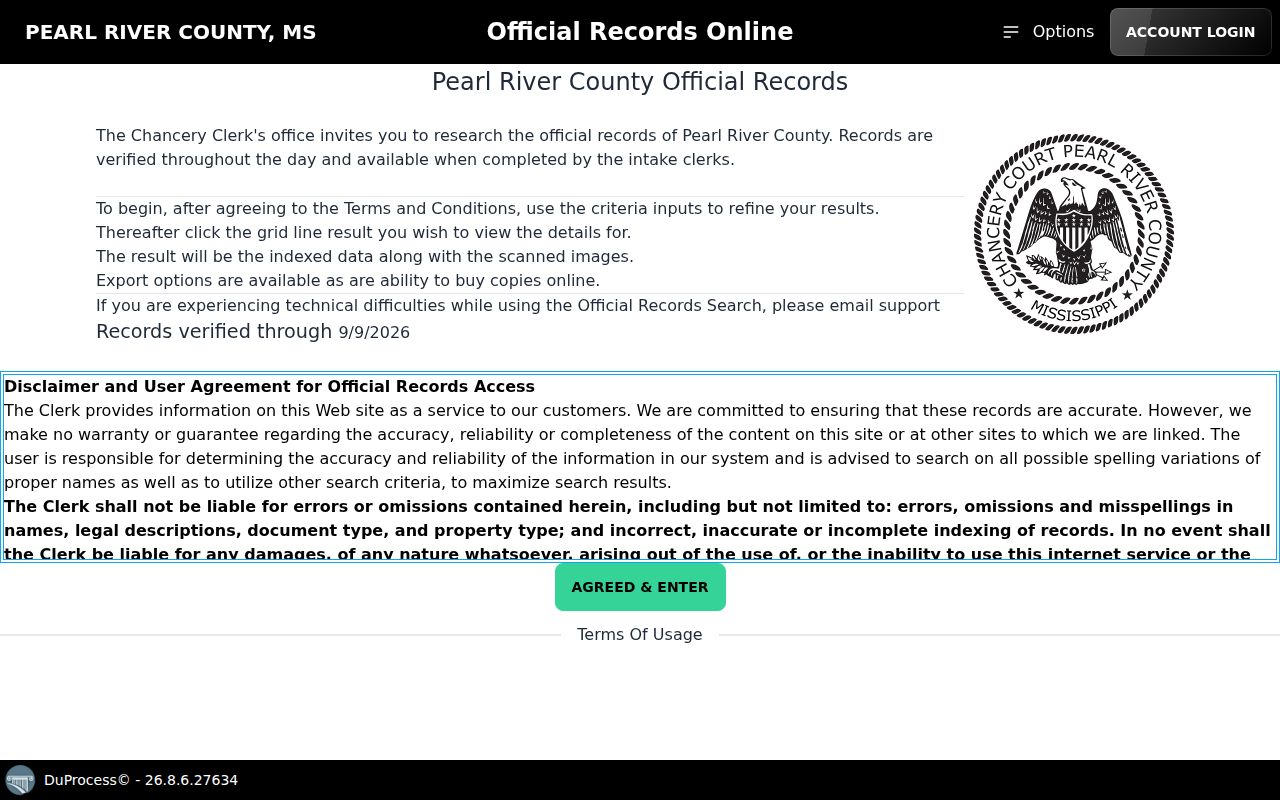
Parcel and legal criteria separate same-name parties without guesswork.
Walk Pearl River Deeds Backward
A chain of title links one tract's recorded transfers. Start from the newest deed reference. That reference usually sits on the assessor or GIS record, and its legal description must match the tract before you walk further back.
- Open the newest deed by book and page, or search the current owner as Grantee.
- Record the grantor, grantee, type, date, citation, and legal description.
- Search that grantor as Grantee in the earlier period.
- Repeat while matching acreage, subdivision, lot, block, and rural calls.
- Check probate, trust, lien, release, and court records where the chain breaks.
- Grantor
- The party conveying an interest.
- Grantee
- The party receiving it.
- Chain of title
- The linked transfer history for land.
- Book and page
- A volume location, distinct from an instrument number.
Trusts, estates, and companies can scramble the name pattern. Search the exact entity wording, trustees, or executors, but treat business status as a clue rather than proof of ownership.
Pearl River Deeds Since 1890
The county reports that its deed-scanning project reaches back to the county's 1890 founding. Searchable-database completion came in late 2018. The Historic Virtual Index offers record type, book, page, previous and next navigation. It also offers display, print, and purchase options.
That statement is not a book-by-book coverage chart. The county publishes no volume-level detail on missing or illegible pages. When an expected image is absent, ask the Records Room for the physical deed book. The Historic Virtual Index page itself displays the book-and-page route.
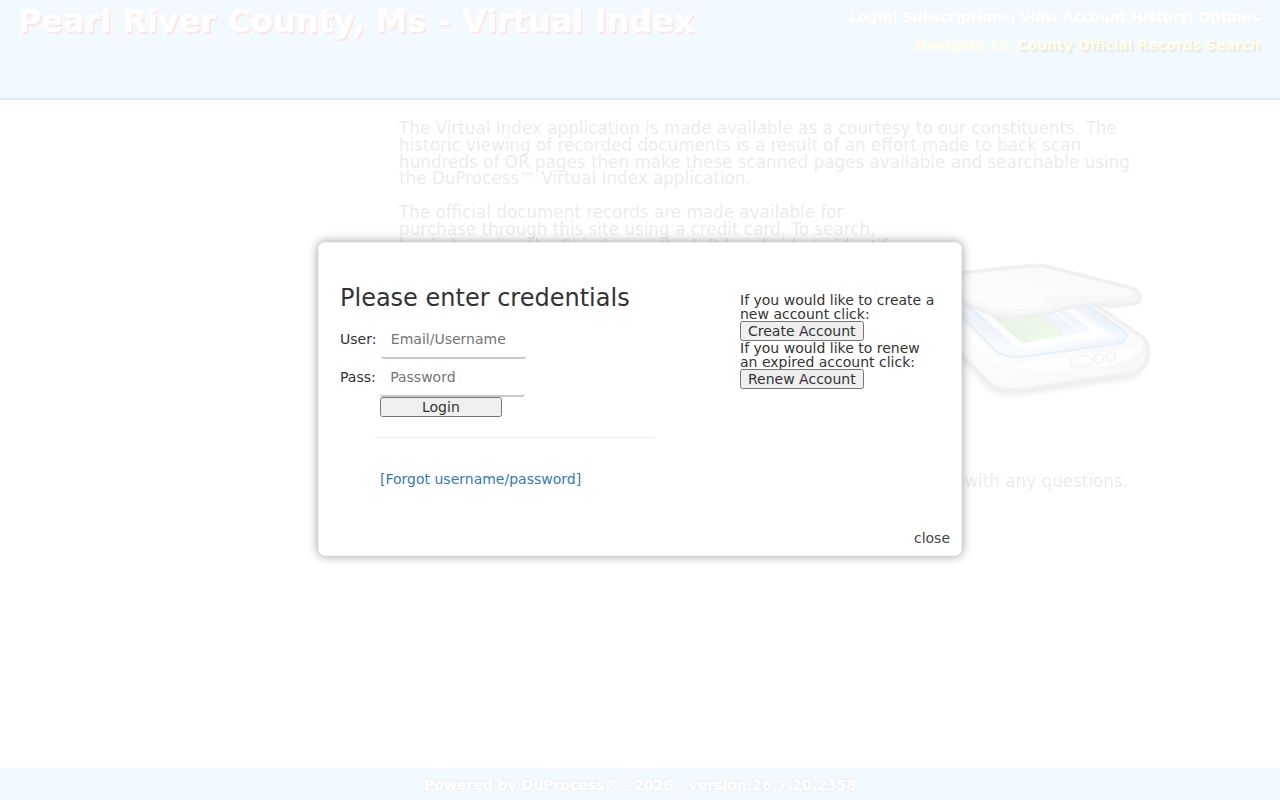
The online screen handles known citations. The clerk remains the fallback for material not visible online. An official local history notes an 1878 courthouse fire but names no destroyed deed volumes. Pre-1890 research may call for clerk guidance, reconstructed records, or the state archives.
Pearl River Fraud Monitoring
The clerk's fraud alert watches newly indexed grantor and grantee names and sends an email notice. Sign-up relies on name variants and email verification. It cannot stop a filing or rule on validity. The signup page itself shows how much monitoring depends on spelling.
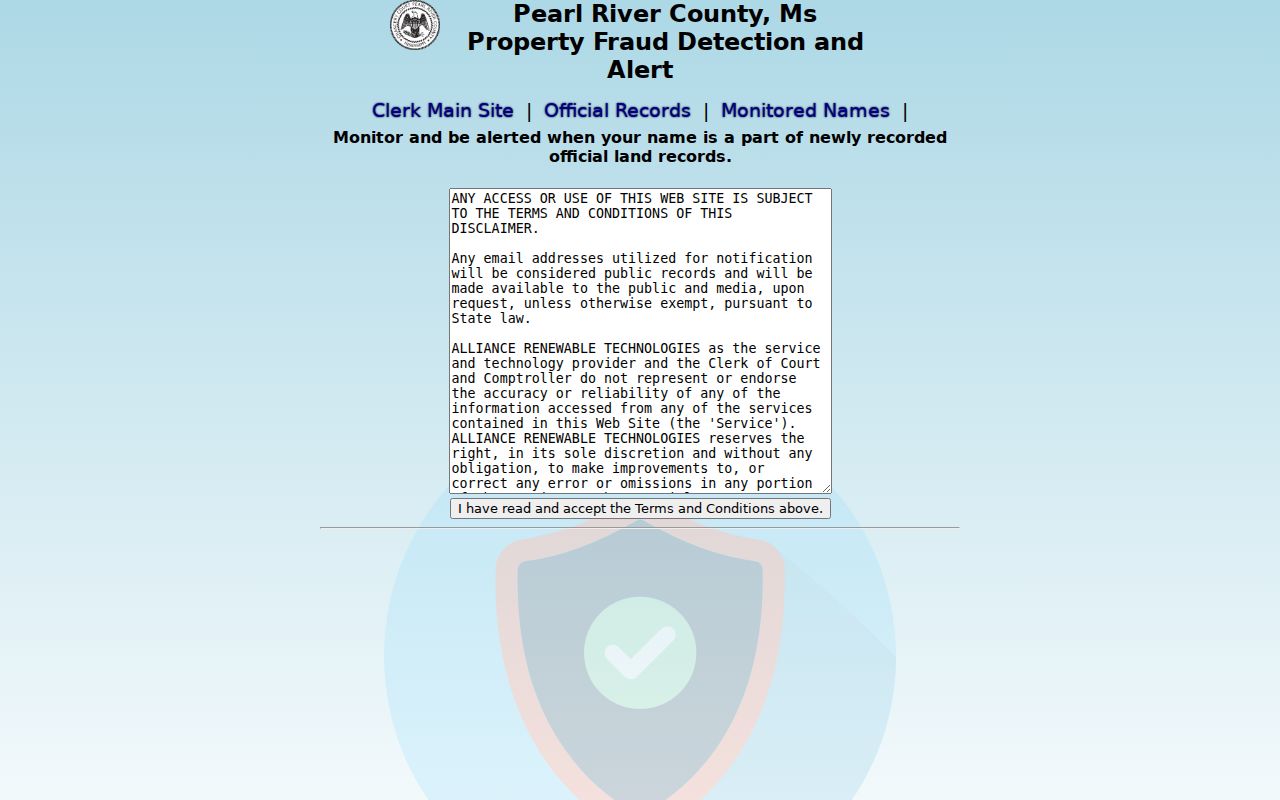
Initials, trusts, and former surnames need separate entries too.
Pearl River Deed Context
A deed is one link in a longer chain. Deeds of trust can secure debt. Cancellations and releases end recorded claims. Plats fix the geometry of a recorded subdivision, and lis pendens flags pending litigation. Because later filings carry weight, search dates well past the acquisition.
Estate or trust transfers may require public Chancery case records through MEC or a clerk terminal. A quiet-title, partition, foreclosure, or redemption matter can explain an unusual sequence. The docket is only a lead. The final order and later recorded instrument show the property result.
For boundaries, compare the deed's legal description against a recorded plat and a survey. The county GIS is an orientation tool only. The Pearl River parcel map can locate a tract. Its tax lines never amend a deed.
Order a Pearl River Deed
Search the index before paying for anything. Online images require an account and credit-card payment. A 3.5 percent service fee applies, and the minimum charge is $2. The fee is nonrefundable. The land-record FAQ separately lists copies made by the public in the office. Those cost 25 cents per page.
General clerk copies and certifications follow a different fee schedule. State whether a plain land-record copy or a certified instrument is required. A mail or written request should list party names, document type, date range, parcel or PPIN, legal description, book and page, desired format, and certification need. A focused Mississippi Public Records Act request is another fallback.
The Poplarville and Picayune counters handle missing images and historic volumes. Certification duties can vary by office. Confirm before traveling.
Recorded, not guaranteed. Pearl River County deed records show indexed instruments, not a title opinion; errors, later filings, and unrecorded interests may affect ownership.
Pearl River Index Versus Copy
An index hit and a deed image serve different purposes. The index is only a finding aid. It points to parties, instrument type, date, book and page, parcel keys, and legal terms. The image carries the operative text: signatures, acknowledgments, exhibits, reservations, and the full legal description. A certified copy adds the clerk's certification. It still does not become a title opinion.
Never read one deed in isolation. Pull later filings under the same names and land description, including deeds of trust, releases, cancellations, easements, liens, lis pendens, plats, probate transfers, and judgments. A newer deed can look decisive until a later instrument explains why it is not.
Platted land needs exact qualifiers. Keep the subdivision name, phase, unit, part, and addition exactly as recorded, because county archive titles rely on those terms and a modern neighborhood name may miss the recorded plat. Rural Pearl River deeds often turn on section, township, range, acreage, and metes-and-bounds calls instead. Those legal keys can outlast any street address.
Save the search trail exactly as found. Keep leading zeroes, volume labels, party spellings, and subdivision qualifiers intact. When you contact the clerk, supply both names and an approximate recording date. Give the deed type, book and page, the parcel or PPIN, and the legal description. Ask whether an instrument missing from the online images still sits in the physical book. Do not conclude nothing was recorded before checking. That careful handoff matters most for an estate, trust, or company. It also helps with a rural tract, or an older plat whose name has shifted over time.
Pearl River Deed Cross-Checks
Names alone never build a chain. Match the legal description, acreage, subdivision, lot, block, section, township, range, parcel ID, or PPIN across every transfer. Old deeds may predate the current parcel number. A later lot split can spin several new identifiers off one parent tract. The legal land description remains the true continuity check.
Keep instrument types straight. A deed records a conveyance. A deed of trust secures an obligation. A cancellation or release affects that security record. Lis pendens gives notice of litigation. A recorded plat supplies subdivision geometry. Search every relevant instrument after each transfer date. The chain must not hide later events behind a single deed result.
Estates call for extra digging. Public Chancery case records may name an executor, administrator, heirs, or an order affecting the land. Check trust and company names under the exact punctuation and suffixes the recorder used. Those sources explain the party path, but the recorded conveyance stays the land-record link.
Historic work needs an honest stopping point. The county states that scans reach its 1890 foundation. Exact book coverage is not posted. The 1878 courthouse-fire story does not prove which volumes burned. Note the gap. Ask the clerk about original or reconstructed books. Treat the archives only as a documented fallback.
For a written deed request, say plainly whether you need inspection. Also state if you want a plain copy or certification. Include the delivery format and your contact details. That clarity lets the clerk separate an index question from a document order. The clerk can then quote the right service.
Keep the clerk's response with the deed citation and search date for later review.