
Trace Pearl River Former Owners
Start with a solid transfer reference. The current parcel card usually supplies a deed book, page, and date. Each older transfer is one row in the parcel's working timeline. Record exactly what the deed states. Leave unknown fields blank rather than inventing a sale date or instrument type.
| Transfer date | Grantor to grantee | Instrument | Book/page |
|---|---|---|---|
| Newest recorded date | Prior owner to current grantee | Copy the indexed deed type | Current parcel-card reference |
| Earlier date | Next prior owner to later grantor | Copy exactly | Earlier acquiring deed |
| Earlier date | Continue the matched land chain | Copy exactly | Earlier book and page |
Chancery index entries can return grantor and grantee parties, instrument type, date, book and page, parcel or PPIN, legal terms, subdivision, block, lot, and street clues. Use several fields at once. A name match without matching land proves nothing.
Pearl River’s Reverse Party Search
The official-records application offers three name directions: All, Grantor, and Grantee. A grantor transfers an interest. A grantee receives one. To find previous owners, start with the current deed. Copy its grantor's exact indexed name. Search that party as a grantee within an earlier date range. The acquiring deed that surfaces should name the still-earlier grantor. The Pearl River County reverse grantor-grantee search shows the search shell for this backward walk.
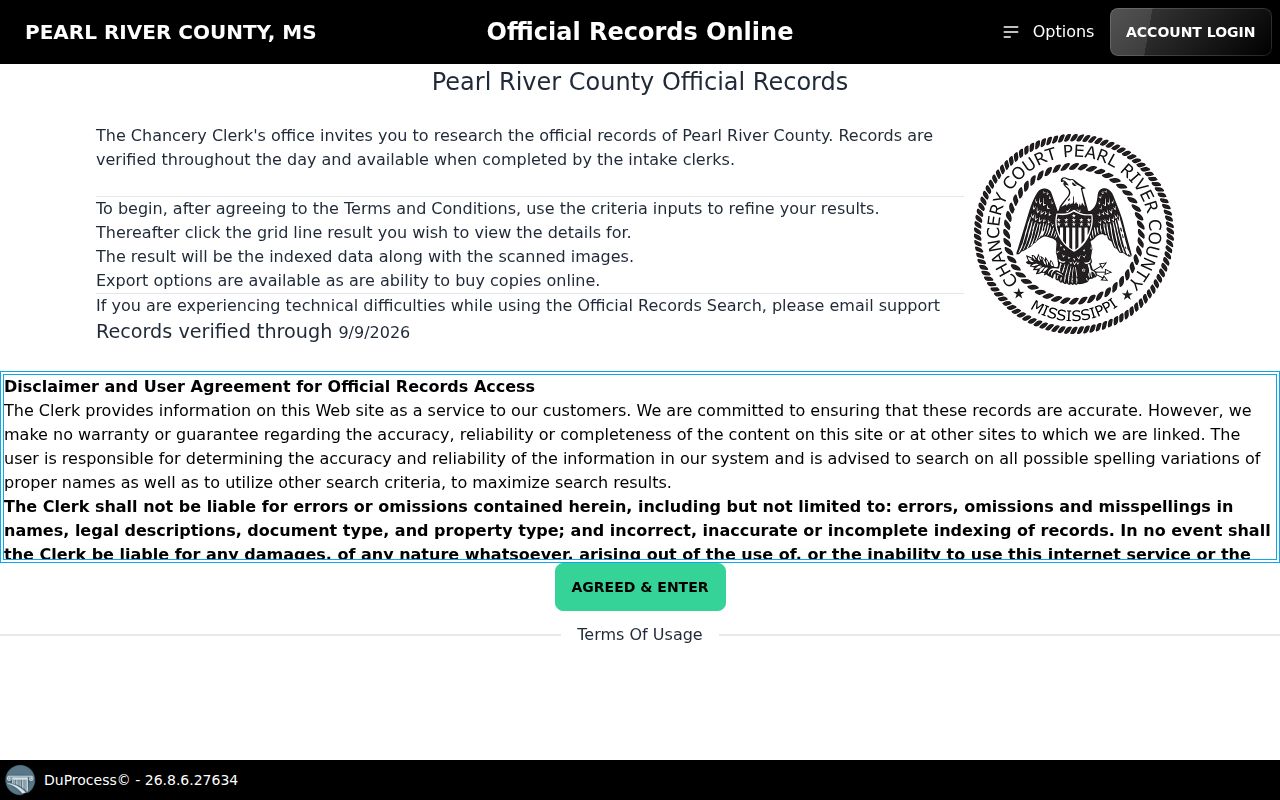
Party direction and date range are only the start. The same interface accepts parcel, legal, book/page, subdivision, and address criteria. Those keys untangle common names.
Reconstruct Pearl River Ownership Backward
Keep a separate log for the parcel. One missed transfer hurts. It can send the search into the wrong family, company, or tract, so log every name and land detail at each step even when consecutive deeds repeat the same legal wording.
- Copy the latest deed book, page, date, PPIN, and legal description from the parcel record.
- Open that deed in the Chancery index and record every grantor and grantee exactly.
- Search the grantor as an earlier grantee. Match acreage, subdivision, lot/block, or section-township-range.
- Repeat until the online trail ends, then carry the last book and page into the Virtual Index or Records Room.
- Grantor
- The party transferring the interest stated in a deed.
- Grantee
- The party receiving that stated interest.
- Chain of title
- The linked sequence of recorded transfers affecting the same land.
- Reverse index
- An index arranged to help locate parties by the opposite transfer role.
- Warranty and quitclaim deeds
- Different conveyance forms; a quitclaim passes only the interest the grantor may hold.
Browse Pearl River’s Historic Book Pages
The Chancery Clerk's separate Virtual Index is organized by record type, book, and page, not by modern address. Controls move through previous and next pages. Book and page jumps are supported too. The index helps when a newer deed cites an older volume. A name search misses those. The historic Virtual Index page displays those controls and its document purchase route.
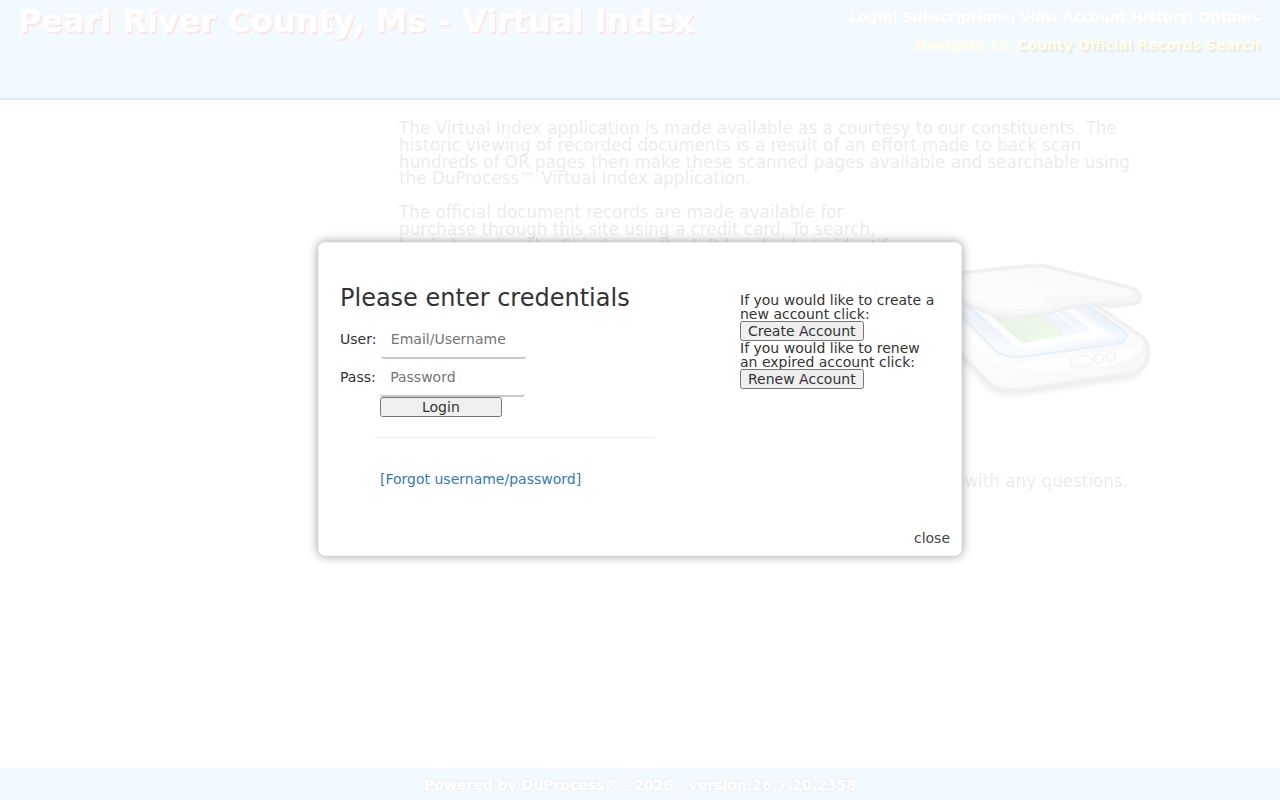
This is a browse tool, not a complete year chart. The public site does not flag every missing or image-ready book, so confirm exact coverage with the Records Room.
Pearl River Plat Names Unlock Chains
Recorded plats keep former owners tied to the correct lot. Pearl River County archive names often carry Units, Phases, Parts, and Additions that a modern neighborhood sign may drop, so search the exact archive version plus spelling variants.
Examples include Hide-A-Way Lake units, The Woods units, North Hill phases, Stone Bridge Estates phases, and Poplarville additions such as J.H. Moores and Derby. Fame is not the clue. The recorded subdivision, lot, block, and phase carry the match from one deed to the next.
Rural chains lean on acreage and section-township-range calls instead. Street names change. Parcel IDs change too. The legal description may preserve the older link that a deed chain needs.
Pearl River Probate Chain Breaks
A chain can look broken. Land may have passed through an estate, administrator's deed, executor's deed, trust, or life estate. Run the decedent, estate name, executor or administrator, trustee, and later grantees through the index. Chancery Court handles estates as well as land. So probate records in Pearl River County can explain parties absent from the last simple sale.
Liens, releases, easements, and deeds of trust belong in the broader title history. They do not automatically change the owner. Keep them distinct while building the timeline.
The 1878 Pearl Courthouse Fire
Pearl County's courthouse burned in 1878, Poplarville's official history says, and Pearl River County formed in 1880 after Pearl County was abolished. The fire is a real warning for deep research. It proves no specific deed book burned. Never fill a gap with a broad fire claim.
Ask a precise question first. Was the volume original, copied, reconstructed, or later indexed? The Mississippi Department of Archives and History Pearl River finding aid covers county material dated 1835 through 1982. WPA Historical Records Survey inventories from 1936 through 1942 also describe older record groups and their custody.
Pearl River Former-Owner Time Depth
The county describes a deed-scanning project that reached back to its 1890 foundation and completed a searchable database in late 2018. Treat 1890 as stated project reach. That is not a promise. Every book and image is not guaranteed online, and the county does not detail book-by-book coverage.
When a chain crosses that line or an image is absent, take the last known book and page to a Poplarville or Picayune public terminal. Ask the Records Room about the physical book. The library and MDAH finding aids add routes through directories, newspapers, tax material, microfilm, and archival context. Pair those clues with the deeds.
Online cutoff caution. Pearl River County states that scanning reaches 1890. Older owners and missing images require deed books, courthouse staff, or archival sources.
Lawful research. Use former-owner records for property history, estate work, and title diligence. Do not use past or current names to harass or target anyone.